Time loops
Miss Peregrine's Home of Peculiar ChildrenTime loops are temporal enclosures in which the same calendar day recurs, although life and memory continue for those within them. The Cairnholm loop fixes its residents in September 3, 1940, giving them decades of lived experience without advancing them through ordinary history. Its protective repetition is not effortless or entirely benign: an entrance must be kept open, and the tranquil sameness that makes long residence bearable can also turn the loop into a prison. The novel eventually contrasts that suspended day with September 4, when the children leave and time begins moving again.
Definition and Discovery
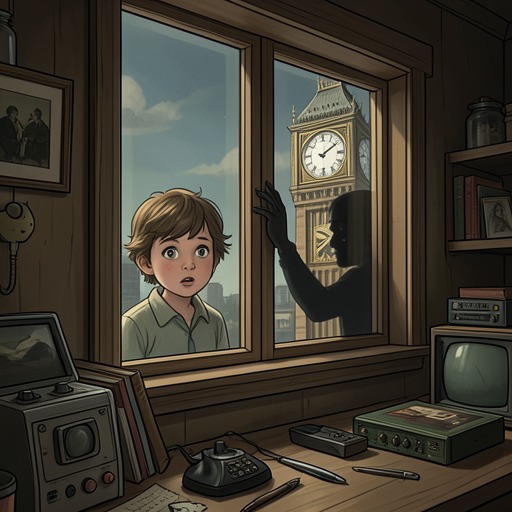
The loop first becomes legible to Jacob through details that seem incompatible: a sudden change in weather, a community of unfamiliar people, and surroundings whose styles look old even though the objects themselves are new. A calendar resolves the contradiction. Its heading reads September 1940, and the first two days have been crossed out; the date is September 3. Jacob then connects his grandfather’s literal directions about crossing to the other side of the old man’s grave with his own passage through the cairn. What had sounded like an obscure instruction proves to describe a route into another time.
The revelation is both a discovery of place and a reordering of cause. Jacob has not merely reached a remote island community: he has entered the same date that its inhabitants repeatedly experience. Millard explains that the wagon and planes have already appeared on the preceding iterations of the day, while Emma identifies Jacob as someone from outside a loop. Repetition is therefore not simply a calendar anomaly; it is the condition that separates the residents’ temporal world from the one Jacob came from.
How the Cairnholm Loop Works
Miss Peregrine explains that ymbrynes can consciously manipulate time fields for themselves and others, and create temporal loops in which peculiar people can live indefinitely. Cairnholm’s loop is identified with September 3, 1940. The date repeats over and over, but the residents’ experience within it is continuous: they remember the decades they have spent there rather than waking each morning without any memory of previous iterations. For most of the loop’s twenty-four hours, the date is September 2; it then becomes September 3 again. In that sense, tomorrow never arrives as a new calendar day.
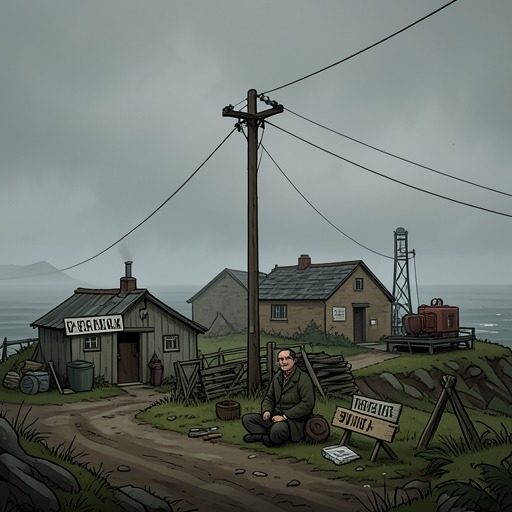
The loop’s temporal isolation has a history. The children and Miss Peregrine had already been on Cairnholm for a decade or more, physically isolated by the island’s geography. Only on September 3, 1940, did they also require isolation in time, because otherwise, Miss Peregrine says, they would all have been killed. The loop thus adds temporal protection to an earlier geographical separation, turning an island refuge into a shelter against events in the outside world.
That shelter has a practical vulnerability: the loop must be maintained. Miss Peregrine says an ymbryne must pass through its entrance from time to time to keep the ingress point pliable. She compares it to a hole in fresh dough that may close if it is not periodically opened. An entryway also functions as a valve for the pressures that accrue in a closed temporal system; without ingress or egress, the loop becomes unstable. The mechanism makes the boundary more than a doorway: it is part of the loop’s continued operation.
Repetition as Refuge and Constraint
The repeated day offers residents an unusual continuity. They can spend decades in the loop and remember that duration even though the surrounding date does not change. For Jacob, however, its pleasantness is strikingly immediate. While waiting for Emma, he settles beneath a tree and quickly becomes drowsy and serenely content; he reflects that the loop seems to act as both mood enhancer and sedative. This response helps account for how its residents might endure repetition without losing their minds, but it also troubles the idea that the loop is simply a paradise.
Jacob recognizes that the same conditions that make the loop soothing may make it imprisoning. The day is beautiful and life seems good, yet the children cannot simply leave without danger. The loop’s pleasant routine can make its restrictions hard to notice: staying appears less like a decision than the natural consequence of comfort, until years have passed and the question of what might have happened elsewhere comes too late. The novel’s tension lies in that double function: repetition protects a community while narrowing its experience of change, choice, and future possibility.
Routes Beyond a Single Loop
Near the end, Millard describes leapfrogging as a way of moving between loops. The process is highly complex and dangerous, but traveling from one loop to another, such as to a day fifty years in the past, can provide access to loops that have ceased to exist within the intervening period. Those loops can in turn open access to further loops, creating an expanding network of possible temporal destinations. Jacob recognizes the implication as real time travel, although the possibility is presented as difficult and risky rather than as easy freedom from the limits of the Cairnholm loop.
This account enlarges the loop from a single refuge into part of a wider temporal geography. The Cairnholm residents are enclosed by one recurring date, but the existence of other loops means that history contains paths not available through ordinary forward movement. Access depends on reaching and traversing these separate temporal environments; the explanation offers possibility without erasing the dangers or constraints of doing so.
The Loop Ends and Time Resumes
After the house is destroyed by bombing, the children leave the damaged loop and cross Cairnholm. On September 4, they are moving beyond the date that had repeated for so long. The children, despite having gone without sleep, feel newly vital; some say the air in their lungs seems fuller and their blood faster. Jacob shares their sense that time is moving again. The departure is therefore not just a change of location: it marks the return of chronological change after life in the recurring day.
That ending sharpens the loop’s central contrast. Within it, residents retain memory and accumulate experience, but the calendar does not advance; outside it, the date changes and the children feel the difference as renewed vitality. The loop has been refuge, home, and limitation at once. Its eventual end makes the cost of suspension visible without denying what the enclosure provided: protection and a life held together across decades, at the price of remaining in one day.